Tarot cards have fascinated people for centuries. Whether you are spiritually curious, seeking clarity, or simply exploring intuition, understanding tarot card meanings can open a powerful path of self-discovery. This complete guide to tarot card meanings for beginners will walk you through everything you need to know — from deck structure to how to perform your first reading with confidence.
If you’re new to tarot, don’t worry. By the end of this guide, you’ll understand the Major Arcana, Minor Arcana, tarot spreads, and how to interpret cards intuitively.
Learn detailed meanings in our Major Arcana guide
What Are Tarot Cards?
Tarot cards are a 78-card deck used for spiritual insight, reflection, and guidance. Contrary to common myths, tarot is not about predicting a fixed future. Instead, tarot reveals:
Energetic patterns
Emotional states
Spiritual lessons
Possible outcomes
Each tarot card carries symbolic imagery that connects to universal archetypes and human experiences.
Many beginners start tarot to:
Understand relationships
Gain clarity about career paths
Receive spiritual confirmation
Strengthen intuition
Tarot acts as a mirror, reflecting your subconscious thoughts and hidden truths.
History and Origin of Tarot Cards
Tarot originated in the 15th century in Europe as playing cards. Over time, mystics and spiritual practitioners began using them for divination and spiritual guidance.
The most commonly used modern deck is the Rider-Waite Tarot Deck, created in 1909. It became popular because its imagery clearly illustrates the meaning of each card, making it beginner-friendly.
Today, tarot is widely used in the United States and globally for:
Spiritual development
Meditation
Manifestation
Energy alignment
Structure of a Tarot Deck
A standard tarot deck contains 78 cards, divided into two main sections:
 Major Arcana (22 Cards)
 Major Arcana (22 Cards)
These represent major life events and spiritual lessons.
Examples include:
The Fool
The Magician
The High Priestess
The Lovers
Death
The World
Major Arcana cards usually symbolize powerful turning points or karmic lessons.
Minor Arcana (56 Cards)
 Minor Arcana (56 Cards)
These represent daily life events and practical situations.
Minor Arcana is divided into four suits:
Cups (Emotions & relationships)
Swords (Thoughts & conflict)
Wands (Passion & action)
Pentacles (Money & career)
Each suit contains:
Ace through Ten
Page
Knight
Queen
King
Major Arcana Tarot Card Meanings (Overview)
Below is a simplified meaning of key Major Arcana cards:
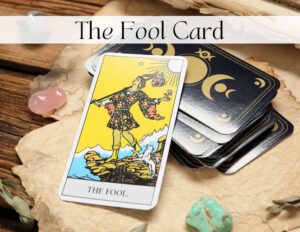
The Fool
New beginnings, innocence, taking a leap of faith.
The Magician
Manifestation, power, confidence.
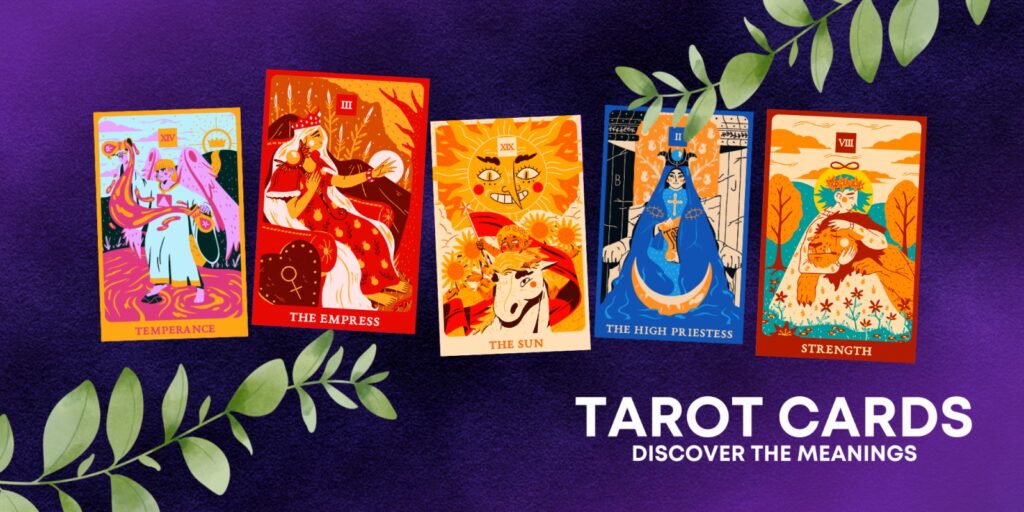
The High Priestess
Intuition, secrets, inner wisdom.
The Empress
Feminine energy, abundance, nurturing.
The Emperor
Authority, leadership, stability.
The Lovers
Love, alignment, choices.
The Chariot
Determination, victory, movement.
Strength
Inner courage, patience, resilience.
The Hermit
Introspection, spiritual search.
Wheel of Fortune
Change, destiny, life cycles.
Justice
Balance, karma, truth.
The Hanged Man
Surrender, new perspective.
Death
Transformation, endings leading to new beginnings.
The Devil
Temptation, attachment, negative patterns.
The Tower
Sudden change, awakening.
The Star
Hope, healing, faith.
The Moon
Illusion, subconscious, fear.
The Sun
Success, positivity, joy.
Judgment
Rebirth, spiritual awakening.
The World
Completion, achievement, fulfillment.
Minor Arcana Tarot Card Meanings
Cups (Water Element)
Represents emotions, love, intuition.
If you pull many Cups cards, your reading focuses on relationships or emotional healing.
Swords (Air Element)
Represents thoughts, communication, conflict.
Swords often indicate mental challenges or important decisions.
Wands (Fire Element)
Represents ambition, creativity, energy.
Wands suggest growth, career moves, or passion projects.
Pentacles (Earth Element)
Represents finances, stability, career.
Pentacles often relate to money matters or long-term security.
How to Read Tarot Cards for Beginners
Follow this simple 5-step process:
Step 1: Set an Intention
Ask a clear question like:
“What should I focus on right now?”
Step 2: Shuffle the Deck
Focus on your question while shuffling.
Step 3: Draw Cards
Start with 1 card or a 3-card spread.
Step 4: Observe the Imagery
Notice:
Colors
Symbols
Facial expressions
Your emotional reaction
Step 5: Interpret Intuitively
Combine:
Traditional meanings
Your intuition
The context of your question
Tarot reading improves with practice.
Common Tarot Spreads for Beginners
1-Card Pull
Perfect for daily guidance.
3-Card Spread
Past – Present – Future
or
Situation – Challenge – Advice
Celtic Cross Spread
Advanced 10-card layout for deeper readings.
If you’re just starting, you may find it helpful to learn how to start reading tarot cards confidently by practicing small spreads daily.
Beginner Mistakes to Avoid in Tarot Reading
Asking the same question repeatedly
Ignoring intuition
Reading only from guidebooks
Expecting fixed predictions
Becoming emotionally dependent on tarot
Tarot is guidance, not control.
Frequently Asked Questions About Tarot Cards
Are tarot cards evil?
No. Tarot cards are tools for reflection and self-awareness.
Can beginners read tarot?
Yes. Anyone can learn tarot with practice and patience.
Do tarot cards predict the future?
Tarot shows possibilities based on current energy, not fixed destiny.
What if I pull the Death card?
Death rarely means physical death. It usually represents transformation.
How Tarot Connects to Spiritual Growth
Tarot strengthens:
Intuition
Emotional awareness
Decision-making clarity
Spiritual alignment
Many spiritual practitioners combine tarot with meditation, journaling, or manifestation work.
If you’re exploring tarot deeply, understanding the meaning of tarot suits can strengthen your readings significantly.
Final Thoughts: Your Tarot Journey Begins
Learning tarot card meanings is a journey, not a destination. Start slowly. Practice daily. Trust your intuition.
Tarot is not about memorizing 78 meanings perfectly. It’s about developing a personal connection with the cards.
As you continue learning, explore individual card meanings and deepen your understanding of both Major and Minor Arcana.
With patience and consistency, tarot becomes a powerful spiritual tool for clarity, confidence, and growth.